


Host Country & City
The Host Country: Portugal
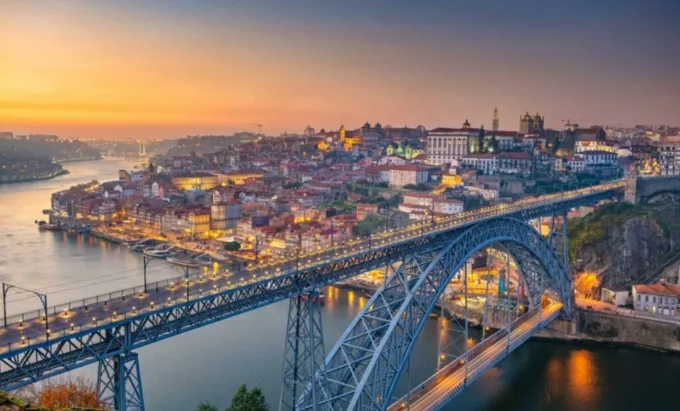
Between the deep blue Atlantic and the golden plains of Alentejo, Portugal stands as a country shaped by the courage to set sail and the ability to remain true to its roots. For centuries, it was from here that caravels dared to explore unknown horizons, opening up sea routes that connected continents, cultures, and knowledge. The Age of Discovery was not only a historical milestone - it became part of the national DNA: curiosity about the world, resilience in the face of challenge, and openness to others remain present in the Portuguese identity.
Portuguese culture thrives on harmonious contrasts: from the melancholic power of Fado to the lightheartedness of popular festivals; from the hustle and bustle of traditional markets to the serenity of rural landscapes; from the art of azulejos to contemporary architecture. The Portuguese language, spoken by millions on several continents, is also a legacy of this global vocation that began with the caravels and today translates into cultural bridges spread across the world.
Only then do the cities reveal themselves, each with its own personality. In the north, Porto asserts itself with character and authenticity, between the Douro and the wine cellars that tell stories of trade and tradition. In Minho, the connection to its roots is manifested in vibrant pilgrimages and an intensely green landscape. In the center, Coimbra breathes knowledge and academic history, while Aveiro combines architectural delicacy with an innovative spirit. Serra da Estrela imposes itself with its imposing nature and villages that preserve ancient memories. Further south, the Alentejo offers wide horizons and a serene rhythm, where singing echoes as an expression of identity. The Algarve reveals a luminous encounter between land and sea, projecting Portugal as an international destination without losing its authenticity. And Lisbon, the capital facing the Tagus, synthesizes this heritage of encounters: historical and contemporary, traditional and cosmopolitan, a point of departure and arrival.
Throughout the country, gastronomy brings generations together around the table, popular festivals light up the streets, and hospitality transforms visitors into guests. Portugal is thus a small country in terms of geography, but vast in terms of history, diversity, and welcoming capacity — a territory where the past inspires the present and continues to shape the future.
|
Capital |
Lisboa |
|
Official Language |
Portuguese |
|
Currency |
Euro (EUR €) |
|
Phone Code |
+351 |
|
Predominant climate |
Mediterranean with Atlantic influence |
|
Traditional musical style |
Fado |
|
Monuments you must visit in Lisbon |
Mosteiro dos Jerónimos and Torre de Belém |
|
Typic dish |
Codfish à Brás (Salt cod with scrambled eggs and potatoes) |
|
Tradicional sweet |
Pastel de Belém, Ovos Moles from Aveiro |
|
Tradicional drink |
Porto’s Wine |
The culture of athletics in Portugal: tradition, talent, and the future
Athletics in Portugal is much more than just a sport—it is a tradition rooted in the country's competitive culture and one of the pillars of Portugal's international success. From school tracks to the grand Olympic stages, athletics has been a place for training champions, but also for instilling values such as discipline, resilience, and overcoming adversity.
In the university context, this culture takes on an even more special dimension. Portugal's participation in the Universiades over the decades proves the consistency and quality of the work carried out in the country. Portugal has a solid track record of medals, with athletes who often combined demanding studies with high-performance sports careers.
Among the gold medals won by Portugal at the Universiade over the years, some names stand out that have marked different generations of Portuguese university athletics. More recently, Agate Sousa shone in the Long Jump at the 2025 edition in Rhine-Ruhr (Germany), while Mariana Machado won the 5000 meters and João Coelho won gold in the 400 meters in Chengdu (China) in 2023, confirming the new wave of national talent. In previous editions, Evelise Veiga stood out in the triple jump (Naples, Italy, 2019), and Sara Moreira had a historic participation in (Belgrade, Serbia, 2009), winning both the 5000 meters and the 3000 meters steeplechase, leaving a very relevant mark on the international university scene. Over the years, Portugal has also accumulated silver and bronze medals, consolidating its position as a benchmark in international university athletics.
The complete list is available below for full consultation of the results:
|
Medal |
Year |
Discipline |
Local |
Athlete |
|
Gold |
2025 |
Long jump |
Rhine-Ruhr |
Agate Sousa |
|
Gold |
2023 |
5000 m |
Chengdu |
Mariana Machado |
|
Gold |
2023 |
400 m |
Chengdu |
João Coelho |
|
Gold |
2019 |
Triple jump |
Nápoles |
Evelise Veiga |
|
Gold |
2017 |
Pole vault |
Taipé |
Diogo Ferreira |
|
Gold |
2017 |
Weight throw |
Taipé |
Francisco Belo |
|
Gold |
2011 |
Triple jump |
Shenzhen |
Nélson Évora |
|
Gold |
2011 |
3000 m obstacles |
Shenzhen |
Alberto Paulo |
|
Gold |
2009 |
5000 m |
Belgrado |
Sara Moreira |
|
Gold |
2009 |
3000 m obstacles |
Belgrado |
Sara Moreira |
|
Gold |
2009 |
Triple jump |
Belgrado |
Nélson Évora |
|
Gold |
2007 |
5000 m |
Banguecoque |
Jéssica Augusto |
|
Silver |
2023 |
Weight throw |
Chengdu |
Eliana Bandeira |
|
Silver |
2023 |
Hammer throw |
Chengdu |
Décio Andrade |
|
Silver |
2019 |
Long jump |
Nápoles |
Evelise Veiga |
|
Silver |
2011 |
Triple jump |
Shenzhen |
Patrícia Mamona |
|
Silver |
2011 |
5000 m |
Shenzhen |
Sara Moreira |
|
Silver |
2005 |
Long jump |
Izmir |
Naide Gomes |
|
Silver |
2005 |
20 km walk |
Izmir |
Vera Santos |
|
Silver |
2001 |
800 m |
Pequim |
Nédia Semedo |
|
Silver |
2001 |
20 km walk |
Pequim |
Susana Feitor |
|
Silver |
1999 |
5000 m |
Palma Maiorca |
Ana Dias |
|
Silver |
1997 |
1500 m |
Sicília |
Carla Sacramento |
|
Bronze |
2017 |
Pole vault |
Taipé |
Marta Onofre |
|
Bronze |
2013 |
Long jump |
Kazan |
Marcos Chuva |
|
Bronze |
2009 |
100 m |
Belgrado |
Sónia Tavares |
| Bronze |
1997 |
1500 m |
Sicília |
António Travassos |
|
Bronze |
1995 |
Pole vault |
Fukuoka |
Nuno Fernandes |
In the context of Portuguese university athletics, the FADU (Academic Federation of University Sports) plays a central role in bridging the gap between higher education and international competition. Through participation in the Universiades, it has allowed countless student-athletes to represent Portugal at the highest level, reconciling academic demands with sporting performance. This model has been decisive in establishing the country on the international scene and in training well-rounded athletes, both on and off the track. Many of the names that are now references in national athletics consolidated part of their careers in this university context. Some of the most notable examples are Nélson Évora, Patrícia Mamona, and Sara Moreira.
Nélson Évora, Olympic champion, also won gold at the 2009 and 2011 Universiades. Patrícia Mamona, silver medalist at the 2020 Tokyo Olympic Games, also won medals at the Universiade and maintains an active connection to university sports, having taken on the role of Head of Mission for Portugal at the 2025 Universiade in Rhine-Ruhr. Sara Moreira is the most awarded Portuguese athlete in university athletics. At the Universiade, in 2009 (Belgrade), she won two gold medals and, in 2011 (Shenzhen), she returned to the podium with a silver medal.
The combination of federated work and the academic context has allowed Portugal to train internationally renowned athletes who combine sporting excellence with academic achievement. This integrated culture strengthens the national sports system and raises the country's profile on the international stage. For all these reasons, Portugal has the ideal conditions to host the inaugural European University Athletics Championships (EUC Athletics) in August 2027, establishing itself as a country that is prepared, experienced, and deeply identified with the sport.
The Host City: Lisbon
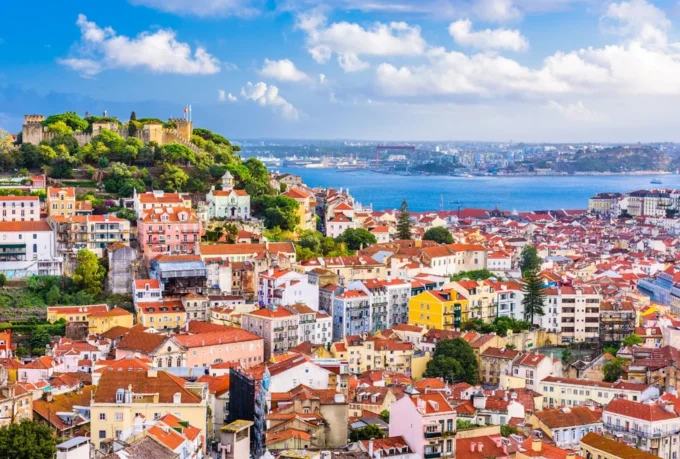
Lisbon is not just a capital city; it is a city built on layers of resistance and reinvention. It was once Roman, Moorish, medieval, imperial. It was destroyed by an earthquake and rebuilt. It is a city that looks out onto the world. For centuries, it was a port of departure for the unknown. Lisbon does not live closed in on itself—it breathes influence, mixes cultures, welcomes accents, and transforms diversity into character.
Lisbon builds its identity through places that are almost living symbols of the city. At the top of the hills, São Jorge Castle silently observes centuries of history, recalling its medieval origins and the heritage left by the Moors that still marks the urban layout. The Praça do Comércio, opening onto the Tejo River, affirms the grandeur of Pombaline reconstruction after the 1755 earthquake. In Belém, the connection to the sea becomes evident. The Belém Tower and the Jerónimos Monastery, both UNESCO World Heritage Sites, are material testimonies to the Age of Discovery, when Lisbon was the center of global maritime routes.
Bairro Alto and Chiado reveal another dimension of the city: cultural and bohemian. With its historic theaters, iconic bookstores, and literary cafés that welcomed writers such as Fernando Pessoa, Lisbon asserts itself as a place of creation and thought. Parque das Nações, a legacy of Expo 98, shows the contemporary side of the capital, with modern architecture, innovation centers, and a renovated riverfront. And then there are the viewpoints from Senhora do Monte to Santa Catarina, which are not just tourist attractions, but places of contemplation, where one can truly understand the undulating geography of the city and its intimate relationship with the river.
Each of these spaces contributes to a larger narrative: Lisbon as a historic, maritime, cultural, and simultaneously modern city, where past and future coexist in constant dialogue.